Thursday, September 19, 2019

Ad Astra and The Sacred Now

The Sacred Now

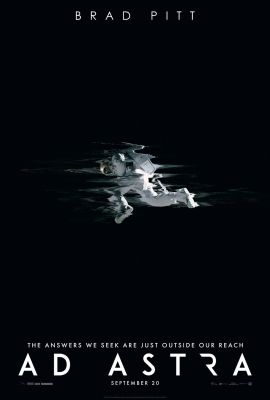
Brad Pitt’s new movie is the best Case for atheism I’ve ever seen, and why I, a pastor, think all Christians need to hear what it has to say.


Thirty minutes ago, as of writing this sentence, I stepped out of Regal Cinemas after having viewed Brad Pitt’s newest sci-fi mind bender, Ad Astra. In the movie, Brad Pitt plays the son of a legendary space traveler (Tommy Lee Jones), who’s courageous work and discoveries have made him the most decorated astronaut in history. Pitt’s character, Roy, has not seen his father since he was sixteen years old, and the movie does not hold back on the existential dread that comes from such abandonment. Roy battles a demon within himself: he carries the same rage-filled distance he has always detected from his father, and constantly wonders if his closest relationships are doomed to crumble because he has inherited his father’s curse of detachment. 

Roy’s father left his wife and son in search of the infinite, to find the great Meaning and Source that lies beneath all of creation. Roy, like his father, has also chosen to see past what is in plain sight (and equally disregarded it) in search of a deeper reality. Roy is dangerously close to becoming like the man who abandoned all the love and splendor in front of him in search of the unseen.

Ad Astra is a movie with a definite message, and it is even summed up in Brad Pitt’s narration about his father, that goes something along the lines of, “He discovered some of the most beautiful things in creation, but he didn’t see them because he was looking for what was not there. He was looking for the unseen beneath the seen. But, beneath it all there was nothing. No love or hate. No darkness or light. No wrong or right.”

As I raced from the theater to my laptop, mulling over the movie in my head, I thought of a lady I knew, and for the sake of anonymity, we’ll call her Lisa. Lisa grew up with a brother and sister. Her dad was a pastor, and her mom dutifully aided her father in running their small church. Lisa knew at a young age that she was gay, and was horrified to tell her family, knowing it would surely mean swift rejection. Lisa attempted to hide and suppress her identity, even to the point of marrying a man and having a son with him. After a number of suicide attempts and emotional breakdowns, and an affair on her husband’s part, she came out of the closet, promptly ending her marriage. Lisa was banned from her family. She was told she would never be allowed to another Christmas, Thanksgiving, or birthday celebration until she ended her life of sin and returned to her (adulterous) husband. When I knew her, Lisa was a bright, hilarious, and warm presence. I couldn’t imagine anyone who truly knew her would reject her.

 The movie Ad Astra warns us against pushing away the verifiable in search of the unverifiable. Just as Roy’s father abandoned his son because he could not see the beauty before him, Lisa’s family disowned her, unable to see the beauty within her. As a pastor, and as someone who has spent his whole life in the church, I have seen time after time religious dogmatism bring wreckage to relationships when one party veers a step or two from the established dogma. 

When our commitment to the unseen leads us away from the sacred connection to what is seen, one has to wonder what merit this commitment has.

I, of course, am not an atheist. Nor do I have any intentions of ever becoming one. But, a thought struck me as I was watching Ad Astra: I have spent so much of my life running away from the seen in search of the unseen. If I die, and I discover there is no unseen, that all I had was the life I was given on earth, would I feel I made good use of my time? If there is no unseen or afterlife, then all I have is my life here and now. My religion fails me, or I fail it, when it leads me away from deep appreciation of the sacred now. If I don’t appreciate my wife, a sunset, the tides of the ocean, the sound of a running stream, the comradery of my friends, or the taste of a cup of coffee with just the right amount of cream and sugar, then did I live in a way that honors the gift it is to simply be alive?

I don’t believe I have to abandon my faith in God or commitment to Jesus in order to live with a deeper appreciation for the holy this. I believe Jesus, properly followed, leads us deeper into a love for all of this, not away from it. Perhaps this is at least partially what he meant when he said, “the Kingdom of Heaven is at hand.” A life waiting for some cosmic rescue, a life lived for a funeral, is a life that dishonors the glory all around us. If my breath is a gift, and this gift has a source, and that source is Love, then I shame the gift when I use my religiosity as a way to push me away from the beauty in front of me.

Growing up in the church I was told to stay away from worldly things, so I’ll end with this prayer: 

May Holy Spirit lead me into an earthier way of living. May I behold the sacred beauty in my spouse. May I stop and savor the smell of freshly ground coffee in the morning. May I breathe deeply the rich air I’ve been gifted with, and see with gratitude the splendor all around me. 
May I not waste one second waiting for that.
May I live with deep appreciation for This.
Amen.


Friday, September 6, 2019

Suicide is a Boogeyman


There is a Boogeyman who dwells deep within my psyche. I have worked hard to not let my life be dictated by the suggestions of this Boogeyman, I am in the driver’s seat of my choices. At times the Boogeyman was close to being in control, close to sitting in the driver’s seat and driving us off the road. I have worked hard to maintain control of my actions, to not let the Boogeyman find his win. And even though it has been a while since I have heard the Boogeyman’s voice, I feel as though he is still there. Lurking and waiting. Waiting for me to fall down, waiting for the time where his voice sounds appealing and tempting once again.

A lot of us have our own versions of “the Boogeyman” we have had to battle. It can be a million different vices for a million-different people, but for me the Boogeyman is suicide. I was in the 8thgrade the first time I heard the voice of this dreadful demon. I had finally realized that I had a tendency to crush on my male friends. Growing up in conservative Pentecostalism while realizing my attractions were not binary left me feeling as though I had few options. The discovery of my alternative orientation felt like a death sentence, and my Boogeyman would capitalize on this fear and vulnerability for nearly a decade. 

I resisted the voices for a couple years. Whenever ideations ran rampant I would force myself to take walks around my neighborhood, heart beating loudly before I ever took a step. The harder the temptation grew to make an irreversible choice, the faster I walked. When I couldn’t walk, I would listen to music. Hours were spent lying on my couch weeping as I played The Shadow Proves the Sunshine by Switchfoot over and over. I would sing that chorus through my tears, desperately searching for any glance of the sunshine to be found in my shadows. 

I was fifteen the first time I tried to kill myself. I figured I could chug a bottle of bleach and that would do the trick. It left me on my bathroom floor, weeping in the shame and the puke. The Boogeyman would whisper many more alluring ideas throughout my life. Whenever the pressure got too much to handle, whenever I felt no control over my circumstances, I knew I could always count on the voice to tell me I could end it all, and never have to feel this way again.

For everyone who can recall it, September 11th, 2001 is a day burned deep into our psyches. There are images of that day which will never leave my head, though one stands out above the rest. As the buildings flooded with fire and ash, many opted to jump out the windows of the gigantic edifices, wishing to rather take their chances with the fall than with the flame. Anyone who has felt the allure of suicide before understands this impulse. It’s not because we’re cowards. It’s not because we want the easy way out. It’s because sometimes the building is too damn hot, and we feel the only option is to jump.


Through counseling, vulnerability, prayer, and sacred conversations with my wife and a few trusted friends, I have learned to resist the voice of the Boogeyman. I have learned to believe the goodness in my life. I have learned to trust another voice. The voice that says “there’s still time to be surprised.”I have bought into hope, to the ideathat all the pain, the fire in the building, is data, not destiny. Even if it feels like I’m burning up, and the building is crashing, perhaps rescue is on the way.

And to you, who reads this, who knows the voice of the Boogeyman, I say the same things to you. Maybe, just maybe, there is still time to be surprised. Maybe, just maybe, you’re not going down with the ship. The world needs you. It needs your gifts. It needs your dreams. It needs your love. It needs your vulnerability. It needs your beauty. It needs you to rebuild that old vintage car you’ve always wanted to fix. It needs you to dance in pretty dresses. It needs you to write that book, to take that dream vacation, to ask that girl out, to take risks, and to bounce back from failures.

 The Boogeyman is a liar. He will never tell you the truth. There is another voice to hear, one to give you hope and define your reality. Hang in there. Wipe the spit from your eye, and expect the unexpected. 


Monday, September 2, 2019

5 Ways to Help a Loved One Suffering a Crisis of Faith: Stuff Let Go from Won't Let You Go (Part 1).


"With the life-giving energy I once received from church withering away, I lost the ability to keep my questions in check. I was terrified. I was standing on the edge of a cliff, and I couldn’t see anything more than fog and mist below. The wind was blowing hard, and I was losing my balance. I was at the edge of certainty, about to fall into mystery."
~Won't Let You Go: Hanging on to Christ and Falling in To Mystery.


I am in the process of writing my first book, Won't Let You Go, which chronicles the process of my loss and rediscovery of the Christian faith. The process has been arduous to say the least, partially because there is so much I want to say, but it doesn't always fit with the through-line I want in the book. I am ironically having to let go of some of Won't Let You Go. So, I've decided to take the pieces I like best that won't make the final cut, edit them to fit in a series of blogs, and publish them this way. I hope they can be of some help and amusement. 

A crisis of faith is no joke, and it is something that has become increasingly common among people my age, i.e. millennials, i.e. people born between 1981 and 1997. This shouldn’t be surprising, since my generation has become one of the least churched generations in decades (Gen Z has beat us out for least churched in American history). In a world where information is so easily accessible, where scientific and empirical data are so compelling, and where it has become increasingly vogue to not identify with any specific religion, faith is difficult to maintain. Many of us know someone who is wrestling with their faith, and it can often times leave you feeling helpless and afraid for said person. Don’t lose heart though, because there are actual ways you can help.


1.       Show Them the Reality of Love

As Science Mike McHargue has said many times, when someone tells you  everything they’ve known and believed is slipping away, the best response is a hug. When someone doesn't know what's real and what's false, show them the reality of tangible love. Remember Jesus’ directive that Christians are to be the ones who bring Gods space (The Kingdom of Heaven) into the human space. When we respond to disconcerting news that a loved one is having a crisis of faith with unconditional love, you bring Gods space to theirs, you reveal that the Kingdom of Heaven is here and now.


2.       Don’t Shame The Doubt

A crisis of faith is a lot like living with the constant threat that your very ground of being can be taken from you at any moment. It is a terrifying, anxiety-inducing, lonely experience. In my experience, it is not something an individual seeks out, rather it is something that happens to her or him. When we respond to the confession of doubt with arguments defending the faith, and scripture references that seem to speak against doubt, as good as our intentions may be, the person in crisis will often feel ashamed, and lock themselves in secret. Instead, listen, offer support and solidarity.


3.       Affirm Their Experience

Doubt is a normal and universal aspect of the human experience. And the brilliant truth of it all is there is room in the Christian story for doubters. Even Christ himself cried out on the cross, “My God, my God, why have you forsaken me?” To doubt is to “fellowship in Christ's sufferings,” as Paul says in Philippians 3. When a person doubts, they participate in the Crucifixion. Don’t be afraid to affirm this stuff is difficult to believe in. An affirmation of experience decreases isolation and increases intimacy. So, affirm the normal and expected terrain of doubt. After all, how many people do you know who have risen from the dead?


         4. Get Curious

When I ventured down the path my faith crisis led me to, I was met with one of two responses when I'd share my experience with people. The first was response was one of suspicion. They'd look at me with a slight squint in their eye, trying to hide their disappoint as they judged that I was arrogantly or naively sliding down the slippery slope of liberalism. The second response was one of curiosity. They would offer empathy, and ask questions about the data and events that led me to my current status. The ones who engaged with me curiously were the ones I eagerly shared with as God become more real to me later on.


        5. Don't Respond Out of Insecurity.

I understand why I was met with suspicion by some. In the past, as my friends confided their doubts to me, I would get suspicious and defensive. The reason for this was the questions they brought up poked at a belief I held tightly, but didn't have a lot of rational behind. When someone questions something that matters to you, and you don't feel you have an adequate defense, it makes you insecure. Resist this insecurity. Again, choose curiosity and empathy, and you will position yourself in their lives as a true ally.


There are many other ways to help loved ones in the midst of a faith crisis (don't pressure them, be patient, validated that they are more important to you than what they believe), but I believe this is a good starting place, and when applied, can alleviate the feeling of helplessness that comes during some of these difficult conversations.


Friday, July 5, 2019

A Way the American Church is Killing Her Pastors

"Five percent of people think; ten percent of people think they think; and the other 85% would rather die than think."
~Thomas Edison

In 2011, a pastor released a book which challenged the dominant presuppositions evangelical theology held surrounding hell. It immediately sparked vitriol and controversy, because if Christians know how to do anything well, its eat our own. I was just coming into my own as a Christian who enjoyed reading and theology. I had enjoyed other work by this pastor, so before any of the aggression hit, I bought this book and read it. It challenged me. It forced me to go back to scripture, and seriously consider the constructs I always held. When I first heard the backlash, I was defensive for the book. At the time, I didn’t agree with everything the book was throwing out there, but I found it reasonable, thoughtful, and it raised some important questions.

Then, other writers and preachers I admired came out against the book. Entire books were written, and sermon series were given, in response to it. At best the critiques were “This is dangerous and wrong.” At its worst, you would have thought this author was the incarnation of Satan himself. In just a matter of months, I too grew convinced this book was heretical trash. Now, you may know what book I am referring to, and if you do, you understand there might be good reason to disagree with some of the content in it. But, if you read the book without the meta narrative surrounding it, you’ll see it is not the scary, anti-Christ propaganda myself and the evangelical machine made it out to be. After re-reading it recently, I found that my initial response, even as a nineteen-year-old, was the more appropriate response than the anger-fueled aggression I later expressed. 

This moment in recent church history shows us a dangerous flaw in the way the American church conducts herself. Now, before I continue, let me say this: I love the church. I am a pastor in the church. I believe church, practiced well, is the last great hope for humanity. I have given my life to the church because I love what she is, and what she can be. Having said that, I have to say this: There are many ways in which churches are killing their pastors. Whether it is overworking them, making celebrities out of them, or rejecting them over microscopic issues, many American churches have done a pitiful job at loving their pastors well. The moment with this book in 2011 is telling of another way the church hurts her pastors.

The author seemed to be trying to teach people how to think, but delivered his message to an audience who insisted on being told what to think. This is indicative of how most evangelical churches treat their pastors. When you rely on your pastor to teach you what to thinkon any given issue, you not only hurt yourself, but you hurt your pastor. The biblical mandate for pastors does not include them being the Thought Police, because it is a cross too big for anyone to bear. The vitriol this book sparked exposed a dangerous trend in main-stream evangelical Christianity: We are not receptive to new input. We may show up to church on a Sunday morning hoping to learn about a story in the Bible, but we don’t want to hear anything that doesn’t already confirm a bias we hold. We want echo chambers. We want to be reminded of the things we responded to in the past, we don’t want to be prodded to go further.

 The Bible does not lend itself very well towards teaching people what to think. On any given topic, you can find multiple perspectives. Does God desire sacrifice or mercy? Does God permit war, or does he want us to love our enemies? Does God want slaves to be submissive to their masters, or does he want to liberate them? Does God condone polygamy or should a husband be of one wife? Speaking of marriage, should people marry and procreate, or is singleness the life God truly desires for humanity? Depending on where you read, you can defend any of these positions with scripture. 

We can make the Bible say whatever we want it to say. This is why good Biblical preaching isn’t telling people what to think, it’s telling people how to think. Good Biblical preaching is teaching people the right questions to ask when reading the Bible. Good Biblical preaching teaches people not to fear the tensions in scripture, it isn’t teaching people how to explain them away. Good biblical preaching teaches people how to dive head-first into the chaotic, poetic, truthful, beautiful, sometimes metaphorical world of the Bible. 

When we force our pastors into the undesirable role of Thought Police, or when pastors force themselves into the role, they inevitably mishandle scripture, and ignore the beautiful ambiguities and tensions laced through-out the Good Book. When it comes to the Bible, teaching folks whatto think rather than howto think brings with it a pressure that can have detrimental consequences. What happens when the pastor doesn’t know what to think? If you have a pastor with any shred of intellectual integrity, I promise you they come across topics that absolutely baffle them. The pastor then has to choose between letting their congregation down or lying about their stance, and they lose themselves in the process. 

There is a vision of a church big enough for the beautiful diversity of thought that flourishes when people are committed to engaging with tensions. There is a problem with closed-mindedness in the church, and the problem hurts everyone. But, there is a solution… it is you and it is me… It is a willingness to dive into the unknown, and wrestle together, and give everyone, including our pastors, permission to say “I don’t know” and “I disagree.”


Friday, March 1, 2019

More Than Prejudice: Why People Are So Mad “Green Book” Won Best Picture at the Oscars


“Hey, you want unity?
Then read a eulogy.
Kill the power that exists up under you and over me.”
~Lecrae, Facts

It was the end of the night at our friend’s house. We had spent the late afternoon and evening in full swing with our annual Academy Awards celebration. We had breakfast for dinner: Waffles, sausage, bacon, home-fries, and mimosas. We filled out our ballots to make our predictions and, as per usual, winner would take home the prize. It was a night of surprises for anybody who was closely following the awards season cycle. Black Panther and Bohemian Rhapsody took home more awards than anybody had predicted. We cheered when Regina King said “God is good all the time,” and were shocked to silence when Olivia Coleman took home best lead actress instead of Glenn Close, a win nobody saw coming. 

Regina King accepting her Oscar for Best Supporting Actress for If Beale Street Could Talk

The show drew to a close, and Julia Roberts took the stage in lovely pink dress. She was announcing Best Picture. There were several worthy candidates in the lot: BlacKKKlansman (my favorite of the bunch), A Star is Born, and Roma were all worthy contenders. It was even cool to see the first superhero movie, Black Panther, in the mix. There were also a few lackluster films in the bunch: Bohemian Rhapsody, Vice, and Green Book were fine movies, but not the caliber of Best Picture nominees we have seen in the past. Most of the group predicted Roma for the win, easily the most stylish and skillful movie of the bunch. Julia opened the envelope, and to the chagrin of many in our group, announced Green Book as the winner. If you have been on the internet at all over the last week, you will have noticed that many people are not happy with Green Book being announced as winner. 

So, what’s the problem? Why is there such a backlash against this movie taking home the award for Best Picture? Well, for starters, Green Book just isn’t that impressive of a movie. Stylistically it’s fairly straight forward and competently directed, but the true draw of the movie lands in the worthy performances from Viggo Mortenson and Mahershala Ali. They, deservedly, received nominations for their work, and Ali took home his second Oscar for his work on the picture(making him only the second black actor to nab two Oscars, after Denzel). But, other than that, there just isn’t much there. It’s a sweet, feel good movie about two men who learn to set aside their differences and become friends. As a self-proclaimed movie fanatic, there is nothing here that stands as an above average work of art that ranks among the year’s best films. It’s good, but it isn’t that good.

The Green Book crew accepting Best Picture

Then there’s the controversy that followed the movie along it’s trail to Oscar glory. First, there’s the story itself. You have a movie featuring the portrayal of one of the most accomplished piano players in our countries history, Dr. Don Shirley, who achieved all he did as a black man during the 1950’s and 1960’s. There’s a fascinating story to tell there. But, rather than make a movie about him, the movie is about his white driver. This, for some, only furthers the frustration that Hollywood is still financing white-driven narratives, leaving people of color in supporting roles. Now, one of the screenwriters and producers for the movie is the driver’s son, and he wanted to make a movie to honor his father and his father’s experience with Dr. Shirley. There are those who find this angle problematic, while others are sympathetic to it.

Then, star Viggo Mortenson used the “N” word during a Q&A. Not a great look for a movie campaigning as having something meaningful to say about race relations in our country, even if there is a bigger context to consider as to why he said it. Then there was the discovery that one of the writers, the driver’s son Nick, tweeted in 2015 affirming Donald Trump saying he saw Muslims cheering after the towers fell on 9/11. There is absolutely no credible evidence to support this claim, and it was birthed out of a prejudice against Muslim Americans. Then it was reported that while directing a movie in the 1990’s, director Peter Farrelly exposed his genitals to several cast members as a joke, which is sexual harassment in the work place.

The list goes on, but most of those situations have explanations that don’t require ruining the careers of the people involved (save Nick’s racist Tweet). However, none of those things are the big problem here. Here’s the problem: Green Book treats racism like it is a problem that goes away if people who are prejudiced simply learn to set aside their differences and have a conversation. It posits the idea that racism works both ways, and will only be solved when both parties take equal responsibility for their racism. Now, let it be known, exposure and communion are great ways to cure prejudice in an individual. But racism is not a person by person problem. The evil roots of racism dig way deeper than simply two people groups who just don’t get along.

Black people are not responsible for racism. It is possible for a person of color to act prejudiced towards another individual, but racism is based on power structures and systems that keep one race of people inferior to another. As a country, we are lightyears away from being in a place where we can say people of color hold a proportional power dynamic to white people. If you don’t believe me, you need no look further than the demographic of races in prison. White people comprise 58% of prisoners in America, while black people make up 38%. When you take into consideration that African Americans only make up 12.1% of the American population we are forced to confront a serious problem, and you have to be willfully ignorant to not see the disproportionate numbers at work here. Either black folks are just worse people, and more prone to commit crimes, or there is something going on in the American system and power structures that continually incriminates people of color while letting white people off the hook. 


There are many, many other examples to look at, but the point is the way Green Book deals with race-relations is not only unhelpful, it’s damaging. Racism continues to exist because in our country we are systemically structured to elevate the white race over the black one, and until serious discussion and reformation is made about the ways these power-structures work, an entire race of people will continually suffer while another fights to maintain their place on the top. Green Book provides a damaging perspective. Another reason racism flourishes today is because too many people believe the deep seeded evils of racism are a thing of the past, something in history books, not a present darkness to be grappled with on a systemic level. Telling people we just need to have a conversation and get along not only refuses to get to the heart of the problem, but it prevents people from ever seeing it. What does it say about our culture that Green Book doesn’t say anything that Driving Miss Daisy didn’t already say thirty years earlier, which didn’t say anything that wasn’t already said in the movie In the Heat of the Night twenty years before that? The Academy just gave top prize to a movie that is no more relevant today than the movie they gave top honors to in 1968! This point is indicative of a culture that wants to believe it has significantly evolved in the last fifty years. And in some ways it has, but we’ve been so busy buying into and spreading the myth of racisms end that we never finished the job.

We don’t need more art telling us to pay no mind to the man behind the curtain. We need art that forces us to confront the uncomfortable realities of the present moment. We need art that exposes the systems that oppress, holds the oppressors accountable, and tells the stories of those on the margins. We need art that gets in our face and forces to look at the evil that needs rectifying. It is a tragic irony that thirty years ago Spike Lee produced such a movie, one that needed the exposure Oscar attention gives a film. Do the Right Thing was a confrontational, artistic essay on the ways systemic racism inflicts violence on an oppressed people group. Still, Do the Right Thing was shut out of the major categories that year, losing out to the safer and easier to stomach Driving Miss Daisy. He offered another picture this year that is arguably more palatable than Do the Right Thing, but not less relevant, with BlacKKKlansman. And that movie lost out to the much safer and easier to stomach Green Book. 


BlacKKKlansman did receive nominations in some major categories, and even earned Spike his first Oscar for screenwriting, but it didn’t win top prize, and was never seriously considered a frontrunner for it. Green Book has been a frontrunner for the award, even with its controversy, since its release. Will it be another thirty years before the mainstream film industry is ready to seriously wrestle with the type of art our society really needs? I pray not. Lives hang in the balance. We don’t have time to waste. We can’t hope for unity as a country if we won’t take a serious look at these issues.


Here's a list of movies that came out in 2018 that held a much more productive conversation about racism, and they're all better movies than Green Book:


If you're interested in resources that help educate on the problem of racism in America, here are some great places to start:
The New Jim Crow by Michelle Alexander (book)
I'm Still Here by Austin Channing Brown (book)
13th (documentary on Netflix)
Black and White: Racism in America (a conversation on The Liturgist podcast available on iTunes.)


Tuesday, February 26, 2019

The 20 Can't Miss Movies from 2018!

Top 20 Movies of 2018


It’s that time of year again! Something I look forward to towards at the beginning of every year is looking back and sorting out what I thought the best movies of the previous year were. I am no professional film critic, so most of these are emotional decisions.  I consider many factors when discerning whether or not I’m watching a great movie: Screenplay (does the dialogue sound natural, are the characters fleshed out, and is the narrative coherent?) Performances, direction, and whether or not I feel the movie accomplished what it set out to achieve. Other things to consider: Do the cinematography, the score, the editing, and the sound design help take the movie and its audience to the places of the director’s intent? If a movie doesn’t accomplish these things it often distracts and takes away from the filmmaker’s intent, making it difficult for it to grab my heart.

Having said that, 2018 was a year full of movies that did this successfully! I included a list of honorable mentions that you definitely should not skip out on just because they didn’t make the top ten of the year. Anyone of these could have been on there.

Honorable Mentions:
The Incredibles 2
Love, Simon
Widows
The Endless
The Ballad of Buster Scruggs
Mission Impossible: Fallout
Lean on Pete
Creed 2
Game Night
Unsane

Also, I don't include documentaries in my top twenty. However, this year saw a few documentaries that are more than worth a watch. These would probably end up on my list if I included the genre. Here are the three must watch docs ranked:

1. Won't You Be My Neighbor
2. Minding the Gap (this is on Hulu, WATCH IT!)
3. Three Identical Strangers


20. A Quiet Place

Director: John Krasinski
Starring: Emily Blunt, John Krasinski, Milicent Simmonds, and Noah Jupe


John Krasinski’s directorial effort should set him up for a prospering career moving forward. Creating a terrifying analogy for parenthood, and casting his wife, made this movie feel like a deeply passionate project. Mastering the use of sound and bringing a visual flare, this is a crowd-pleasing horror movie that many will be re-watching for years to come.


19. Bad Times at the El Royal

Director: Drew Goddard
Starring: Jeff Bridges, Cynthia Erivo, Dakota Johnson, Jon Hamm, and Chris Hemsworth.

Have you ever wondered what The Hateful Eight would have looked like if Quinton Tarantino had a soul? Wonder no more! Cabin in the Woods co-writer and director Drew Goddard returns with his second directorial outing, and he hits the ball out of the park. Creating a colorful ensemble cast in a secluded setting with lots of twists and violence, Goddard is clearly channeling his inner Tarantino… Yet, Bad Times carries within it an inspiring optimism and characters in search of redemption. This is a fun, weird, intense, and immensely entertaining movie.


18. Vice

Director: Adam McKay
Starring: Christian Bale, Amy Adams, Steve Carrell, Sam Rockwell, and Tyler Perry.

At times hilarious, and other times enraging, Adam McKay’s manic style he presented in The Big Short is amped up (for better and for worse) in this Dick Cheney biopic. Christian Bale continues to prove why he’s the best actor of his generation in his fully immersed interpretation of the infamous V.P. Add to the mix a biting script, sharp editing, fantastic supporting performances, and you have a movie that shouldn’t be missed. 


17. First Man

Director: Damien Chazelle
Starring: Ryan Gosling, Clair Foy, Kyle Chandler, and Jason Clark

Damien Chazelle’s third outing (after Whiplash and La La Land) only further proves his fantastic versatility. Ryan Gosling and Clair Foy bring honest, nuanced, and complicated depth to their performances that never wink at the camera. The final act will definitely leave you looking at the moon with a little more awe.


16. American Animals

Director: Bart Layont
Starring: Evan Peters, Blake Jenner, Berry Keoghan, and Jared Abrahamson.

There is not a dull second in this movie. Documentarian Bart Layton expertly merges the movies one half biopic and one-half documentary into a funny, poignant, thrilling, and ultimately sobering film. And it is worth mentioning how fantastic the main cast is.


15. Avengers: Infinity War

Directors: Joe and Anthony Russo
Starring: Who isn't in this movie?


How do you take a movie that is the culmination of nineteen previous movies, stars dozens of main characters, and not have it feel like a manic, over-crowded mess? I don’t know, but if you want to know ask Infinity War directors Joe and Anthony Russo. They accomplished the impossible, while taking the DCEU to task on bringing some darkness and edge to the universe.


14. Tully

Director: Jason Reitman
Starring: Charlize Theron, McKenzie Davis, Ron Livingston, and Mark Duplas.

Tully plays out like as a comedy, drama, psychological thriller, and horror movie. Charlize Theron delivers one of the best performances of her career and Jason Reitman brings his best game since Juno. It may be the most effective movie version of birth control since Rosemary's Baby.


13. Beautiful Boy

Director: Felix van Groeningen
Starring: Steve Carrell, Timothee Chalamet, Maura Tierney, and Amy Ryan

Steve Carrell (one of my favorite actors working today) and Timothee Chalamet (the Leonardo DiCaprio of his generation) deliver some of the best performances of the year in this tough and tender look at drug addiction and its effects on a family. The movie excels in helping you understand how someone allows themselves to travel down this destructive path without glamorizing it. Made with lots of heart, Beautiful Boy will stick with you long after the credits role.


12. Annihilation

Director: Alex Garland
Starring: Natalie Portman, Jennifer Jason Leigh, Tessa Thompson, Gina Rodriguez, and Oscar Isaac.

It should be no-surprise that Ex Machina’s writer/director Alex Garland’s next outing would be a strange and challenging sci-fi thriller tackling dark themes, but I don’t anybody was expecting it to be this strange or challenging. Featuring dazzling visual effects, chilling performances, and some genuinely horrifying moments, Annihilation isn’t for everybody, but for fans of think-y movies it is a real treat.


11. 8th Grade. 

Director: Bo Burnham
Starring: Elsie Fischer and Josh Hamilton

Bo Burnham has such a dry and seemingly cynical presence in comedy act that it caught me off guard to see such aching compassion in his first outing as a writer/director. 8th Grade tells the story of a young girl expected to live and look like an adult, but still living on the edge of childhood. It is funny, sweet, heartbreaking and at times horrifyingly awkward, but it is one of the best coming-of-age movies we’ve had in years. Elsie Fisher and Josh Hamilton bring a lot of heart and soul to their performances, and Bo Burnham paints every scene with love and empathy. 


10. A Star is Born

Director: Bradly Cooper
Starring: Bradly Cooper, Lady Gaga, Sam Elliot, Andrew Dice Clay, and Dave Chapell

This is so much more than a vanity project. When it comes to directing, Bradley Cooper is the real deal. Lady Gaga gives one of the best performances of the year in a naturalistic and raw display, and Cooper excels at everything he does for the movie (acting, singing, writing, producing, and directing). I loved this movie because it manages to take a story that has been made 3 times (1937, 1954, 1976) and make it feel fresh. This doesn’t feel tired, or like a classic case of Hollywood running out of ideas, it shimmers with movie magic and entertains every second of its two hours and fifteen minutes.


9. Roma.

Director: Alfonso Cauron
Starring Yalitza Apricio, Marine De Tavira


Alfonso Cuaron directed one of my favorite movies of all time with Children of Men, but here he brings us his most passionate and personal work. In what is mostly a autobiographical work, Cuaron finds beauty in the mundane, and delivers a loving homage to the women who raised him in the backdrop of the turbulent Roma, Mexico. Roma packs a punch with its heart, style, skill, and profound sense of wistfulness.


8. If Beal Street Could Talk

Director: Berry Jenkins
Starring: Kiki Layne, Stephen James, Regina King, and Colman Domingo

Barry Jenkins, the writer/director of 2016’s Moonlight (another one of my favorite movies), shows us with his most recent outing that he is a true auteur. That is to say that his influence over and vision of the movie make it feel as if he is the films author. Like Moonlight, If Beal Street Could Talk feels like a musical without any flashy numbers: The dialogue is the lyrics, the score the melody, the camera the dance, and it’s all orchestrated by his masterful directing. The movie manages to evoke rage and beauty within the same breath, a rare feat that only a poet/prophet like Jenkins could pull off. This filmmaker is no fluke, and it is an absolute sham this movie did not get more Oscar attention.


7. Black Panther

Director: Ryan Coogler
Starring: Chadwick Boseman, Michael B. Jordan, Lapita N'Yongo, Danai Gurira, Martin Freeman, Andy Serkis, and Forrest Whitaker

Black Panther may not be the first superhero movie worthy of a Best Picture nod from the Academy (I see you The Dark Knight and Logan), but it certainly deserves all the praise it is getting. Writer/Director Ryan Coolger’s heart and soul bleed through every frame, and Michael B. Jordan gives us one of the most complex and engaging villains in movie history. This is a film with a lot to say about colonialism, heritage, race, legacy, holding the powerful accountable, the current political climate… oh and it’s a superhero movie.


6. Blindspotting

Director: Carlos Lopez Estrada
Starring: David Diggs and Rafeal Cassel


This was the biggest surprise of the year for me, in that it was not on my radar at all before I saw it. Blindspotting managed to have me laughing until my stomach hurt in one moment, shaking with rage in another, and brought tears of sadness to my eyes the next. It accomplishes all of this without any sense of tonal inconsistency, and that is insanely hard to pull off (watch any Tyler Perry movie to see what I mean). Daveed Diggs and Rafael Cassel (real life best friends and the writers of the movie) are a revelation, and I hope this is only the beginning of more material from them.


5. Spiderman: Into the Spiderverse

Directors: Bob Perischetti and Peter Ramsi
Starring: Shameik Moore, Jake Johnson, Hailee Steinfeld, John Mulaney, Liev Schreiber, Katheryn Han, Mahershala Ali, Lily Tomlin, Brian Tyree Henrey, Chris Pine, and Nicolas Cage


As good as Black Panther was, it wasn’t even my favorite superhero movie of the year. This movie was so much better than it had any right to be. Not only is it a visual masterpiece, but it takes what should have been an insanely complex narrative and makes it totally palatable. Add to it the fact that Miles Morales is an instantly love-able hero, profound cultural relevance, a screenplay and voice performances that give these animated characters a soul, and you have my second favorite Spiderman movie (behind 2004’s Spiderman 2).


4. Boy Erased

Director: Joel Edgerton
Starring: Lucas Hedges, Nicole Kidman, Troye Sivan, and Joel Edgerton

Joel Edgerton has written and directed a deeply emotional and passionate project in Boy Erased. Led by the reliably phenomenal Lucas Hedges and featuring Oscar worthy supporting performances from Nicole Kidman (the greatest actress of all time, don’t @ me) and Russell Crowe, this movie brings nuance and sensitivity to a subject that could have been handled in such an ugly way. Telling the story of a pastor’s kid who is subjected to the abusive horrors of a gay conversion therapy program after coming out to his parents, Edgerton makes room to truly establish the humanity of his characters without excusing the devastating impact of conversion therapy. Opting not to make the boy’s parents villains, but a couple doing the only thing they know to do to help their son. That is a risky move in today’s world, but for anyone who has loved someone they fundamentally disagreed with, it’s wonderfully refreshing. 


3. BlacKKKlansman

Director: Spike Lee
Starring: John David Washington, Adam Driver, and Topher Grace

Spike Lee is a provocative auteur. That’s not news to anybody. Still, the maestro fits his message, his love for cinematic history, his social awareness, his conviction, his sense of humor, and his uncompromising style in BlacKKKlansman effortlessly. This movie should
have drowned in tonal inconsistency, but it manages to provoke side-splitting laughter and deft rage within the same scene. This is Spike’s best movie since Do the Right Thing.


2. Hereditary

Director: Ari Aster
Starring: Toni Collette, Gabriel Byrne, Alex Wolf, and Ann Down.

Let me start this off by saying this movie is horrifying. If you hate scary movies, anyone who tells you to watch this is not your friend. However, the horror in Hereditary is not just in gruesome visuals (though there is some of that) or the supernatural elements, but rather the brutally honest depiction of grief, guilt, and mental illness. First time director Ari Aster floods every shot with multiple levels of meaning, and demands multiple viewings to catch all the nuance he brings to the picture. Toni Collette gives the best performance of her career. This is one of the most underrated and overlooked movies of the year, and if you love a good horror movie, or even more so you love movies that illustrate the deeper life experiences, you owe it to yourself to watch this one.


11.     First Reformed

Director: Paul Schrader
Starring: Ethan Hawke, Amanda Seyfried, and Cedric the Entertainer.


If you know me you know I am a sucker for movies that love to tackle the light and easy questions like faith, doubt, God, and human responsibility. First Reformed joins an elect club of fantastic movies from the 2010’s that takes these themes seriously (Tree of Life, Silence, Higher Ground etc.). Writer/Director Paul Schrader, who grew up in the Reformed Christian tradition, tells an agonizingly honest portrait of a pastor who experiences a crisis of faith. As a pastor myself, the scenes of him doing ministry were all too familiar, and the theological debates reminded me of my Facebook profile during my deconstruction. Ethan Hawke delivers the best performance of his career, and his Oscar snub is one of the most criminal in my lifetime. Schrader tells the story with an incredible visual flare that rivals anything else he has done, and the ending will stay in your mind for days after the credits role. If you are a fan of Taxi Driver, if you love movies that deep-dive into faithfulness and doubt, First Reformed is a must see.